Optimising Level and Interface Measurement in Offshore Oil & Gas
Whether you’re dealing with slug flow, emulsion layers, or high-pressure separators, having precise insight into your vessel internals can make the difference between stable production and process upset.
Why Interface Measurement Matters Offshore
In offshore processing, crude oil rarely comes alone. It’s mixed with water, gas, and sometimes solids. Separation of these phases is handled by a range of vessels—from 3-phase separators to desalters and slug catchers.
Here, instrumentation doesn’t just track fluid levels. It must also detect the interface, or separation layer, between immiscible fluids—typically oil and water.
Accurate tracking of this interface is crucial to prevent:
- Water carry-over into the oil export stream
- Oil carry-under into the water treatment system
- Control loop instability and inefficient chemical dosing
That’s why robust interface measurement is essential—not just for control, but for compliance, efficiency, and safety.
Common Offshore Applications

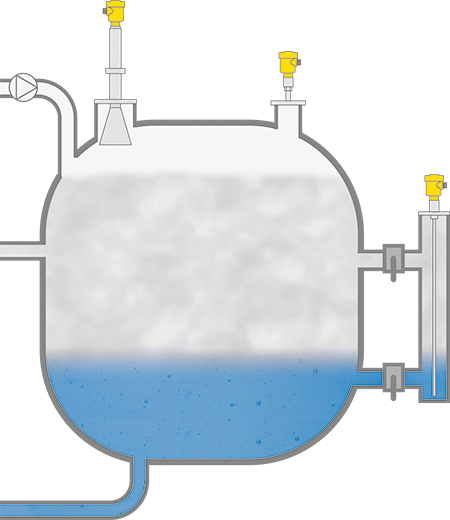
Figure 1: Level and pressure measurement in an oil separator [Far left]
1. Three Phase Separators
The first line of defence in production processing, these vessels rely on instrumentation to manage all three phases of flow.
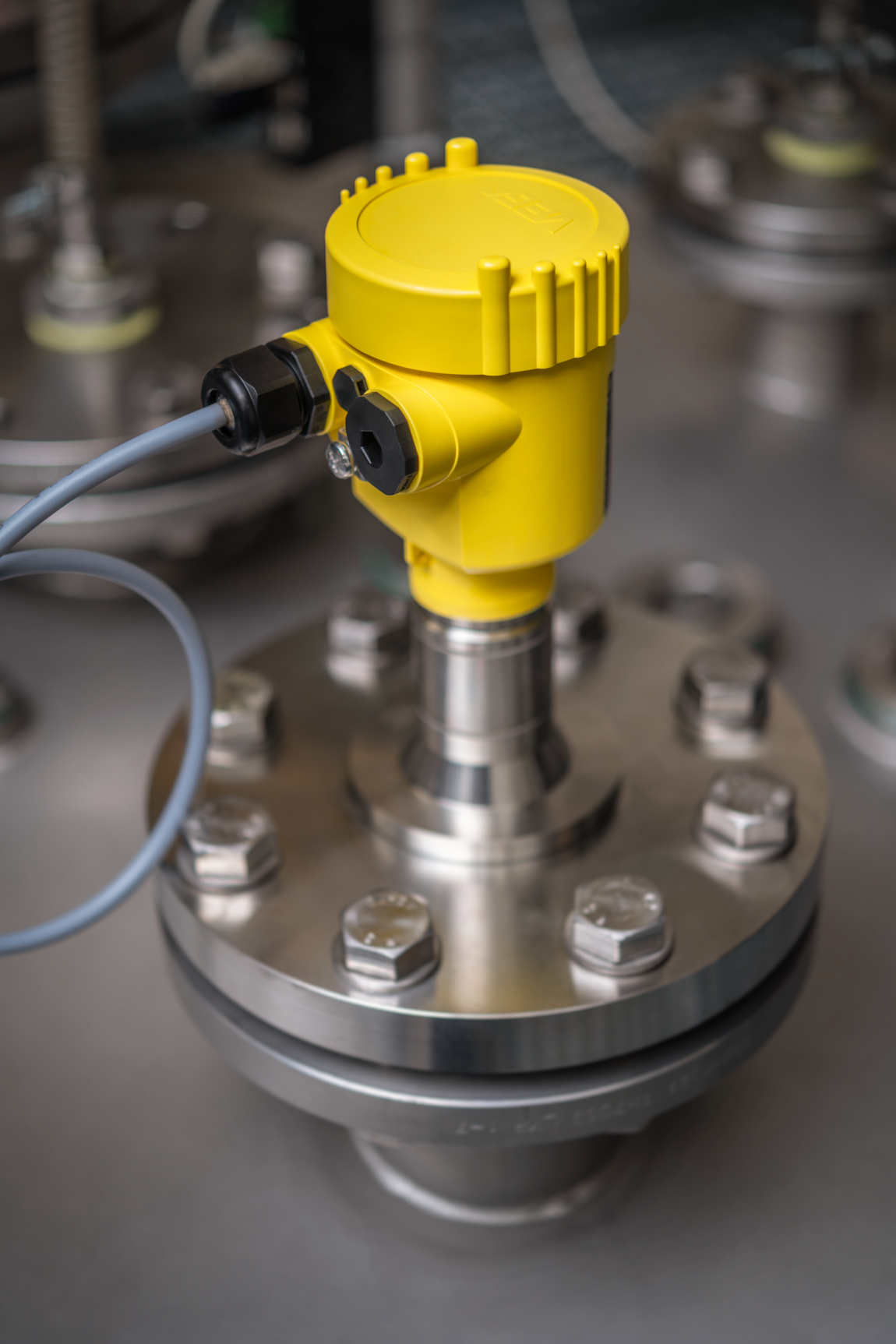
Guided wave radar like the VEGAFLEX series provides accurate, reliable readings of both total level and interface—even in difficult emulsions.
Instruments must withstand high pressures, H₂S, and foaming, while delivering stable signals in dynamic conditions.

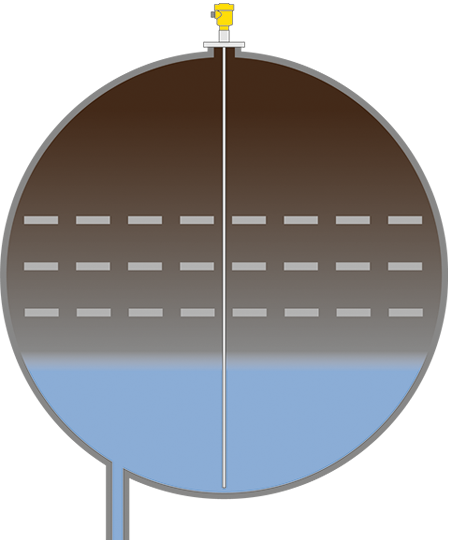
Figure 2: Interface measurement in the desalter
2. Dehydrators & Desalters
Used to treat crude before export, these units require tight interface control to prevent water and salt contamination.
Sensors help maintain the correct electrode height, manage chemical dosing, and avoid water breakthrough. This is particularly important when operating to BS EN or API export specifications.
3. Vessel-Type Slug Catchers
Slugs, or large volumes of liquid entering a gas pipeline, are a constant challenge offshore. Vessel-type slug catchers are used to buffer these events and protect downstream equipment.
VEGAPULS Radar Sensors deliver fast, accurate non-contact bulk level measurement, even during sudden surges. Interface monitoring ensures the vessel doesn’t flood or short-cycle.
Choosing the Right Technology: Guided Wave Radar vs Non Contact Radar
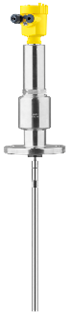
Use Guided Wave Radar when:
- You need precise interface detection, especially in emulsion layers
- Working with 3-phase separators, dehydrators, or compact vessels with limited space
- Measuring in bridle chambers or turbulent internals
- The process involves foam, vapour saturation, or high pressure
Example: VEGAFLEX 86 – high-accuracy guided wave radar sensor, SIL-certified, suitable for challenging offshore applications.
Use Non-Contact Radar when:
- Monitoring total level in larger or open vessels
- Handling condensate, ballast, or slug volumes
- Dealing with vapour-heavy or corrosive media
- Preferring low-maintenance, hygienic installations with no direct media contact
Example: VEGAPULS 6X – 80 GHz radar, designed for precision, even in fast-changing or aggressive environments.
Ensuring safer, smoother operations
By choosing the right radar technology for each application, offshore operators can unlock significant gains in control and performance. Guided wave radar delivers confident interface monitoring in harsh, high-pressure vessels, while non-contact radar ensures quick, uninterrupted level readings in larger or surge-prone environments.
Together, they enable more stable flow regulation, optimised chemical dosing, and reduced downtime. More importantly, they help meet environmental and safety compliance—keeping offshore production both efficient and secure.
From separators to slug catchers, VEGA’s radar technologies are trusted worldwide to deliver clarity in the most complex measurement conditions.
Related industries
Refining and petrochemical
Related applications
Oil separators
Level and pressure measurement in an oil separator
The separator vessel contains a mixture of crude oil, gas, water and sand extracted from the subsea well. Precise monitoring of these multiple separation interfaces and emulsions play a vital role in ensuring the quality of the oil separator for separation. Exact control of interfaces, level and pressure allows optimum utilization of the oil separator and increases the effectiveness of the entire asset.

Reliable
Measurement results are unaffected by process conditions
Cost effective
Efficient operation and high oil quality
User friendly
Maintenance-free operation
Gas separators (scrubbers)
Level and pressure measurement in the gas separator
Extracted natural gas and gas residues from oil production are contaminated with water and are therefore collected in gas separators (scrubbers) for separation. Pressures of up to +150 bar keep the gas in the liquid state. Exact pressure and level measurement enable optimal utilization of the gas separator and effective control of the gas drying process. The separation of gas from water is carried out by chemically binding the water to glycol and separating it mechanically. Accurate measurement of the gas/water interface determines the quality of the gas.
Reliable
Reliable measurement, independent of process conditions
Cost effective
Ensures an effective gas drying process, and thus high quality gas
User friendly
Maintenance-free operation
Secondary desalter
Interface measurement in the secondary desalter
To maximize efficiency of the electrostatic grid as it removes contaminants within second and third stage desalters, a crucial point of control is to maintain the oil and water interface just below this grid. Reliable measurement of this level protects the grid from shorting out on the water as well as increasing efficiency of the unit, which ensures the quality of the feed moving into the next process unit.
Reliable
Unaffected by changing crude density
Cost effective
Low maintenance costs
User friendly
Fast and easy setup
Related products
Export this article
Download as PDFShare this article
Comments ({{comments.length}})
{{getCommentAuthor(comment, "Anonymous")}} {{comment.timestamp | date : "dd.MM.yyyy HH:mm" }}
{{comment.comment}}